How Often Should You Replace a Roof? Signs It’s Time
How Often Should You Replace a Roof? A Complete Homeowner’s Guide
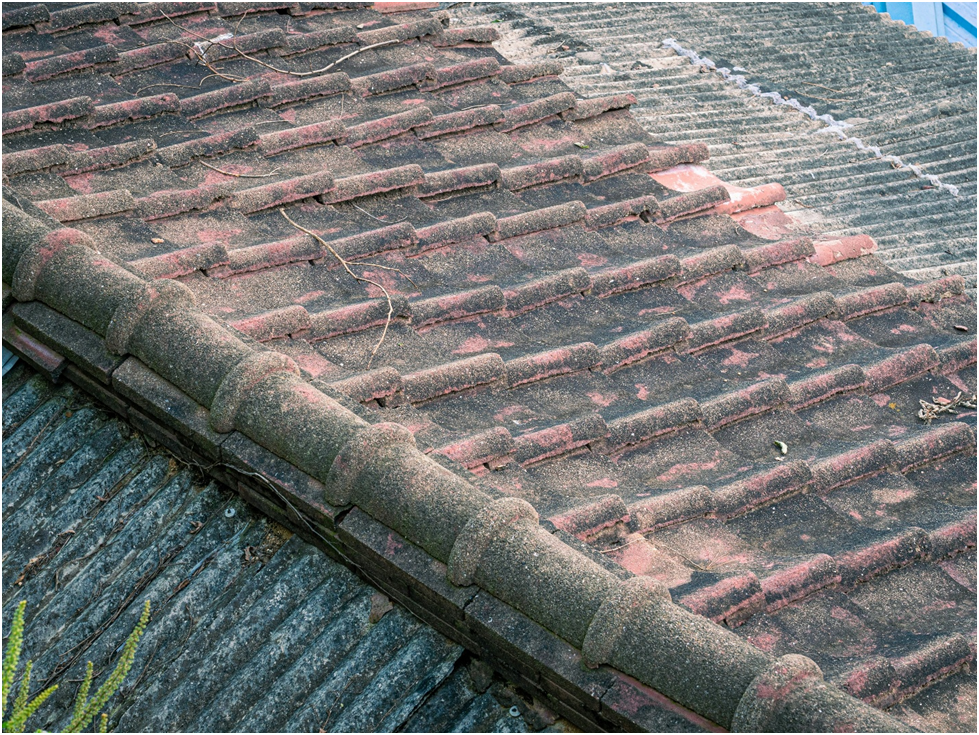
Replacing a roof is one of the biggest maintenance decisions a homeowner will face. Unlike repainting walls or replacing flooring, a roof protects your entire home from rain, wind, snow, sunlight, and temperature changes. Waiting too long to replace it can lead to costly water damage, mold growth, insulation problems, and even structural repairs.
If you’re wondering how often should you replace a roof, the answer isn’t based on age alone. While every roofing material has an expected lifespan, the right time for replacement also depends on its condition, the local climate, installation quality, maintenance history, and whether it has suffered storm damage.
Many roofs continue performing well beyond their expected lifespan with proper care, while others may require replacement years earlier because of poor workmanship or harsh weather conditions.
This guide explains how often should you replace a roof, how to recognize the warning signs, what influences roof replacement timing, and how to make an informed decision before small problems become expensive ones.
Key Takeaways
- Most roofs last between 20 and 50 years, depending on the material.
- Frequent leaks and widespread damage are often signs that replacement is needed.
- Regular inspections and maintenance can extend your roof’s lifespan.
- Replacing an aging roof early may prevent expensive structural repairs.
Quick Answer
Most residential roofs need replacement every 20 to 50 years, depending on the roofing material, local weather, installation quality, and maintenance.
A roof should be replaced when:
- It has reached the end of its expected lifespan.
- Repairs are becoming frequent or expensive.
- Leaks continue despite previous repairs.
- Large areas show visible deterioration.
- Storm damage has compromised its ability to protect the home.
Rather than relying on age alone, homeowners should combine regular inspections with knowledge of their roof’s material and overall condition.
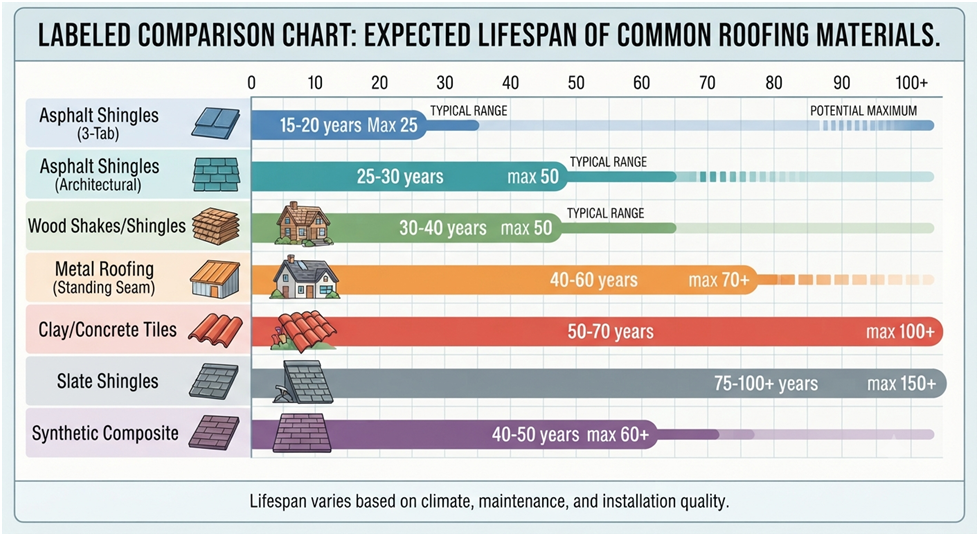
Average Roof Replacement Timing by Material
The type of roofing installed on your home has the greatest influence on when to replace a roof.
| Roofing Material | Typical Replacement Timing |
| 3-tab asphalt shingles | 15–20 years |
| Architectural asphalt shingles | 25–30 years |
| Premium asphalt shingles | 30–40 years |
| Wood shingles | 20–30 years |
| Cedar shakes | 30–40 years |
| Metal roofing | 40–70 years |
| Concrete tile | 50+ years |
| Clay tile | 50–100+ years |
| Slate | 75–150+ years |
These are general estimates rather than guarantees. A roof’s actual service life depends on many factors beyond the roofing material itself.
| Roof Material | Maintenance Level |
|---|---|
| Asphalt | Medium |
| Metal | Low |
| Wood | High |
| Clay Tile | Low |
| Slate | Low |
Why There Isn’t a Single Roof Replacement Schedule
One of the biggest misconceptions homeowners have is believing every roof should be replaced after a fixed number of years.
In reality, roofing manufacturers provide estimated service lives based on typical conditions. Two neighboring homes with identical roofing materials can have very different replacement timelines because of differences in installation, ventilation, maintenance, and exposure to severe weather.
Think of roof age as one part of the decision—not the only one.
For example:
- A 22-year-old asphalt roof with no leaks and minimal wear may continue performing well.
- A 15-year-old roof with poor ventilation and repeated storm damage may already need replacement.
This is why roofing professionals evaluate both age and condition before recommending a new roof.
What Determines When You Should Replace a Roof?
Several factors work together to determine a roof’s lifespan. Understanding these influences helps homeowners avoid replacing a roof too early—or waiting too long.
Roofing Material
Some materials naturally resist weathering better than others.
For example:
- Asphalt shingles gradually lose protective granules as they age.
- Metal roofs resist moisture and insect damage.
- Clay and concrete tiles tolerate intense sunlight very well.
- Slate is one of the most durable roofing materials available.
Choosing the right roofing material is often the biggest decision affecting long-term replacement costs.
Local Climate
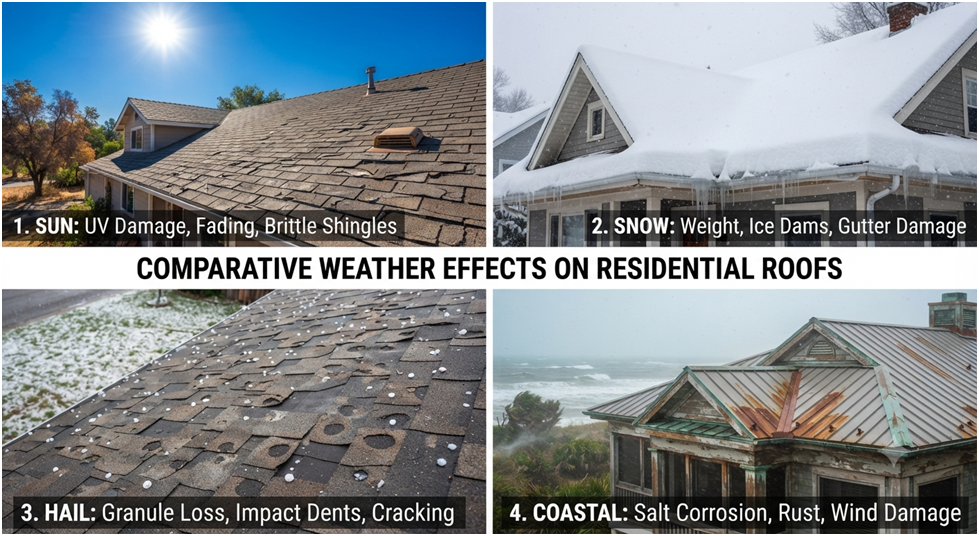
Weather has a significant effect on roofing performance.
Roofs located in areas with frequent hail, hurricanes, heavy snowfall, or prolonged periods of extreme heat often age faster than those in milder climates.
Conditions that may shorten roof life include:
- Strong UV exposure
- Repeated freeze-thaw cycles
- Heavy snow accumulation
- High winds
- Coastal salt air
- Frequent hailstorms
Even within the same state, homes in different environments may experience different rates of roof wear.
Installation Quality
A high-quality roofing material cannot compensate for poor installation.
Some of the most common installation problems include:
- Incorrect nail placement
- Poor flashing installation
- Improper underlayment
- Uneven shingle alignment
- Inadequate ventilation
These mistakes may not become obvious immediately but can shorten the roof’s lifespan over time.
Practical homeowner insight
Many roofing problems that appear to be “material failures” actually begin with installation errors. This is one reason it’s important to hire experienced, licensed contractors rather than choosing solely based on the lowest estimate.
Roof Ventilation
Attic ventilation often receives less attention than shingles or flashing, but it has a major influence on roof longevity.
Without proper airflow:
- Heat builds up beneath the roof deck.
- Moisture becomes trapped inside the attic.
- Wood framing may begin to rot.
- Mold can develop.
- Asphalt shingles may become brittle sooner than expected.
Good ventilation helps control temperature and moisture throughout the year, reducing unnecessary stress on the roofing system.
Maintenance History
Routine maintenance is one of the easiest ways to delay roof replacement.
Simple tasks include:
- Cleaning gutters
- Removing branches and debris
- Replacing damaged shingles promptly
- Inspecting flashing
- Checking the attic after heavy storms
Ignoring small issues often allows moisture to spread into the roof structure, increasing repair costs later.
Signs You Need a New Roof
Age alone doesn’t determine roof replacement timing. The condition of the roof is equally important.
Some warning signs are obvious, while others require closer inspection.
1. Curling or Buckling Shingles
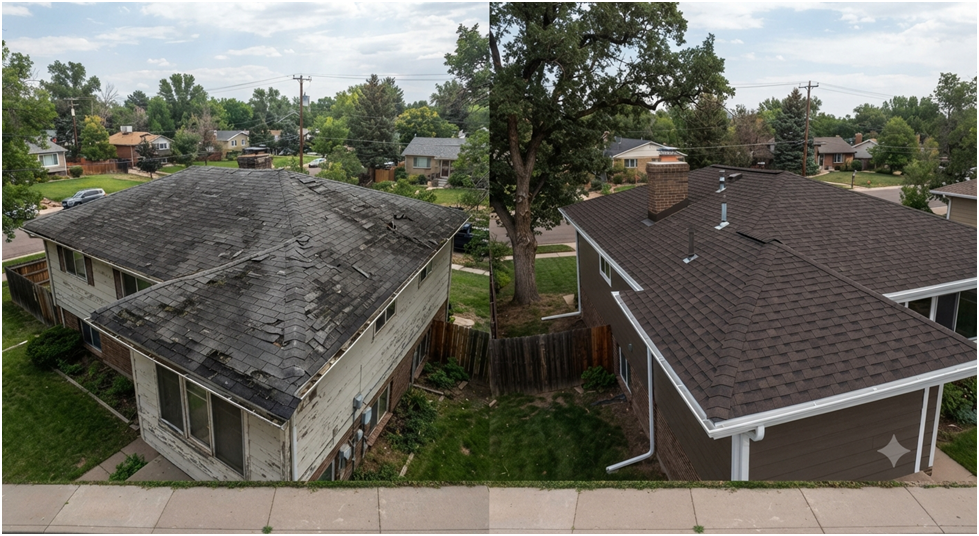
As asphalt shingles age, they may begin curling upward along the edges or buckling in the middle.
This usually means the shingles have lost flexibility and are no longer sealing properly against wind and rain.
If curling affects large sections of the roof rather than isolated areas, replacement may be more practical than repeated repairs.
2. Missing Shingles
A few missing shingles after a storm can often be replaced.
However, if missing shingles become a recurring problem or large sections are affected, the roof may be reaching the end of its useful life.
Repeated shingle loss can expose the underlayment and roof decking to water damage.
3. Granules Collecting in Gutters
Asphalt shingles are coated with protective mineral granules that shield them from sunlight and weather.
Finding a small amount of granules in gutters is normal for newer roofs, but excessive granule loss on an older roof often indicates advanced wear.
Without this protective layer, shingles deteriorate more quickly.
4. Frequent Roof Leaks
A single leak doesn’t always mean the entire roof needs replacement.
Leaks may result from:
- Damaged flashing
- Loose vent boots
- Broken shingles
- Storm damage
However, if leaks continue appearing in different locations despite multiple repairs, replacing the roof may be more cost-effective.
Practical homeowner insight
Many homeowners focus only on the location where water appears inside the house. In reality, water often travels several feet before becoming visible, making professional leak diagnosis especially valuable.
5. Sagging Roof Areas
A sagging roof should never be ignored.
It may indicate:
- Water-damaged decking
- Structural weakness
- Rotting wood
- Excessive weight from trapped moisture
Unlike cosmetic problems, sagging often requires immediate professional evaluation.
6. Daylight Visible in the Attic
If you can see sunlight entering through the roof boards while standing in the attic, water can usually enter through those same openings.
This often indicates deteriorated roofing materials or damaged decking.
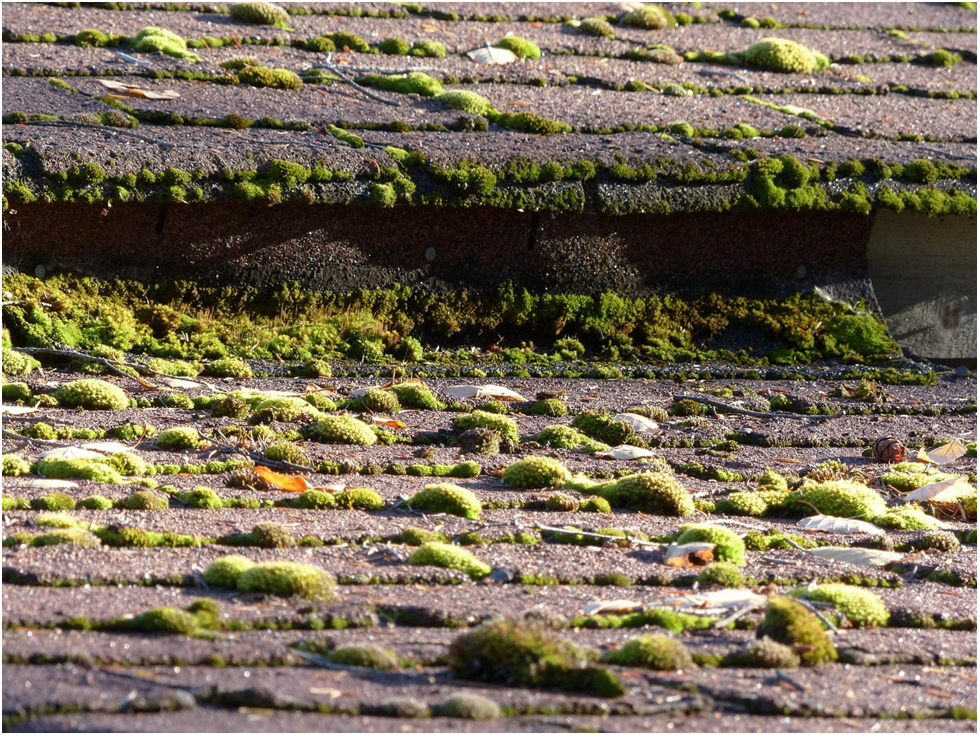
7. Moss and Algae Growth
Moss doesn’t automatically mean a roof requires replacement, but heavy growth can trap moisture against roofing materials.
Over time, this may:
- Lift shingles
- Slow drainage
- Increase moisture retention
- Accelerate deterioration
Removing moss using roofing-safe methods helps reduce long-term damage.
Should You Replace Your Roof Before It Starts Leaking?
Many homeowners wait until they notice water dripping from the ceiling before considering roof replacement. Unfortunately, by that point, damage may already extend beyond the roofing material itself.
A roof can develop hidden problems long before leaks appear inside the home. Water may soak into the roof decking, insulation, or attic framing while remaining invisible indoors.
Replacing an aging roof before widespread leaks develop can help prevent:
- Interior ceiling damage
- Mold growth
- Damaged insulation
- Rotting roof decking
- Higher repair costs
Decision-making tip
If your roof is approaching the end of its expected lifespan and inspections reveal multiple signs of deterioration, it is often more economical to plan a replacement rather than continue investing in frequent repairs. Scheduling a replacement before a major failure also gives you time to compare contractors, choose materials carefully, and avoid emergency pricing after severe weather.
Can You Replace Only Part of a Roof?
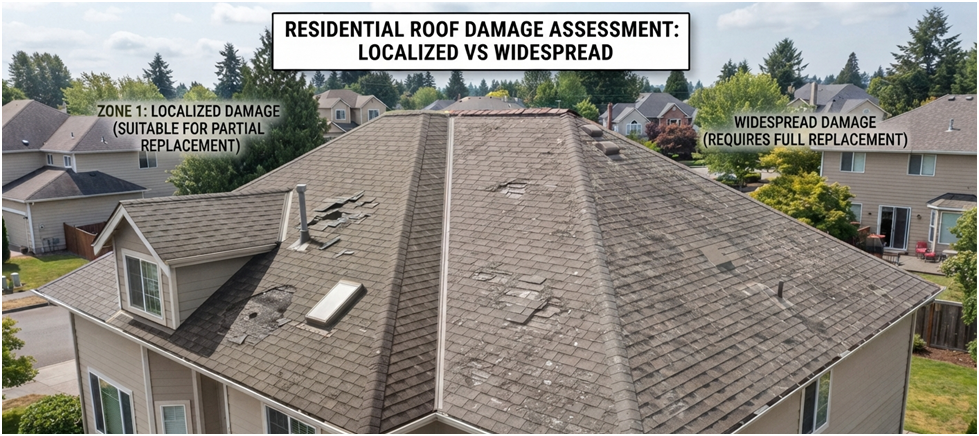
In some situations, replacing only one section of a roof is a practical option. This is most successful when the damage is limited to a specific area and the remaining roof is still in good condition.
Partial replacement may be appropriate if:
- Storm damage is confined to one slope.
- A tree damaged a localized section.
- The existing roofing material is still available and matches reasonably well.
- The rest of the roof has many years of service life remaining.
However, if the roof is already near the end of its lifespan, replacing only one section may simply postpone a full replacement while increasing overall costs.
A roofing contractor can evaluate whether a partial repair will provide lasting value or whether replacing the entire roof is the more cost-effective choice.
Common Mistakes That Lead to Early Roof Replacement
Many roofs wear out sooner than expected because of avoidable mistakes rather than old age. Understanding these issues can help you extend your roof’s lifespan and reduce repair costs.
| Mistake | Why It’s a Problem | Better Approach |
| Ignoring small leaks | Water can spread into the roof deck and attic before it’s visible indoors. | Repair leaks as soon as they’re discovered. |
| Delaying missing shingle repairs | Exposes the underlayment to rain and UV damage. | Replace damaged shingles promptly. |
| Allowing gutters to clog | Water backs up under roofing materials and damages fascia boards. | Clean gutters regularly, especially in autumn. |
| Walking on the roof unnecessarily | Can crack tiles, loosen shingles, or damage flashing. | Inspect from the ground or hire a professional. |
| Choosing the cheapest contractor | Poor installation may shorten roof life significantly. | Compare experience, reviews, warranties, and licensing—not just price. |
| Ignoring attic ventilation | Excess heat and moisture speed up roof deterioration. | Ensure intake and exhaust vents are working properly. |
| Letting tree branches touch the roof | Branches scrape roofing materials and increase debris buildup. | Trim branches back from the roofline. |
Practical Tip: Many expensive roof replacements begin with a small issue that could have been repaired for much less if discovered early.
Roof Repair vs. Roof Replacement: How to Decide
One of the hardest decisions homeowners face is whether to repair an existing roof or replace it completely.
In general, repairs make sense when the damage is limited and the roof still has many years of useful life. Replacement becomes a better investment when deterioration is widespread or recurring.
Quick Comparison
| Situation | Repair | Replacement |
| One or two missing shingles | ✅ | |
| Small flashing issue | ✅ | |
| Minor leak from a damaged vent boot | ✅ | |
| Storm damage affecting one section | ✅ Often | |
| Roof near end of expected lifespan | ✅ | |
| Multiple recurring leaks | ✅ | |
| Widespread curling shingles | ✅ | |
| Significant granule loss across the roof | ✅ | |
| Sagging roof structure | ✅ (after inspection) |
Questions to Ask Yourself
Before deciding, consider these questions:
- Is the roof close to its expected lifespan?
- Have repairs become more frequent over the last few years?
- Is the damage isolated or spread across multiple areas?
- Will another repair only delay an inevitable replacement?
- Are you planning to stay in the home for many years?
If you answer “yes” to several of these questions, replacement may provide better long-term value.
At a Glance
| If… | Then… |
|---|---|
| Only one or two shingles are damaged | Repair |
| Roof is over 25 years old and leaking repeatedly | Replace |
| Storm damage affects one section | Inspect first |
| Roof is sagging | Replace immediately after professional evaluation |
How Roofing Professionals Decide Whether a Roof Needs Replacement
Professional roof inspections involve much more than checking shingles.
During an inspection, contractors often evaluate:
| Inspection Area | What They Look For |
| Shingles or tiles | Curling, cracking, missing pieces, granule loss |
| Flashing | Rust, gaps, loose seals around chimneys and vents |
| Roof decking | Soft spots, water damage, structural weakness |
| Gutters | Excessive granules, drainage problems |
| Attic | Moisture, mold, ventilation, daylight entering |
| Roof structure | Sagging or uneven sections |
| Previous repairs | Whether earlier repairs are still performing properly |
A complete inspection helps determine whether repairs will solve the problem or simply postpone replacement.
Roof Replacement Costs: What Affects the Price?
The cost of replacing a roof varies considerably because every home is different.
Factors that influence pricing include:
- Roof size
- Roofing material
- Roof pitch (steepness)
- Number of valleys, dormers, and skylights
- Local labor rates
- Removal of old roofing
- Structural repairs, if required
- Permit requirements (where applicable)
Instead of focusing only on the lowest quote, compare the complete scope of work offered by each contractor.
Cost Factors Comparison
| Factor | Lower Cost | Higher Cost |
| Roof size | Smaller homes | Larger homes |
| Roof shape | Simple gable roof | Complex multi-level roof |
| Roofing material | Asphalt shingles | Slate, copper, clay tile |
| Existing roof removal | One roofing layer | Multiple roofing layers |
| Accessibility | Easy access | Limited access or steep slopes |
Because roofing costs vary widely by country, region, labor rates, and material choice, obtaining multiple local estimates is more reliable than relying on national averages.
Practical Buying Tip
A significantly lower estimate may indicate lower-quality materials, reduced labor, or missing work items. Always compare written estimates line by line before making a decision.
Can Roof Warranties Outlast the Roof?
Many homeowners assume that a “50-year warranty” means the roof will definitely last 50 years.
This is a common misunderstanding.
There are generally two different warranties:
| Warranty Type | Covers |
| Manufacturer’s warranty | Defects in roofing materials |
| Workmanship warranty | Installation errors made by the contractor |
Neither warranty guarantees that the roof will remain problem-free for a specific number of years. Weather, maintenance, and accidental damage can all affect the roof’s actual lifespan.
Always read warranty terms carefully, as some warranties require regular maintenance or approved installation methods to remain valid.
Seasonal Roof Maintenance Checklist
Routine maintenance is one of the best ways to delay roof replacement.
| Season | Recommended Maintenance |
| Spring | Inspect for winter storm damage, replace missing shingles, check flashing. |
| Summer | Look for signs of heat damage, inspect attic ventilation, trim overhanging branches. |
| Fall | Clean gutters, remove leaves, inspect before winter arrives. |
| Winter | Watch for ice dams, heavy snow accumulation (where applicable), and interior leaks. |
Following a simple yearly maintenance routine can help identify problems before they become expensive repairs.
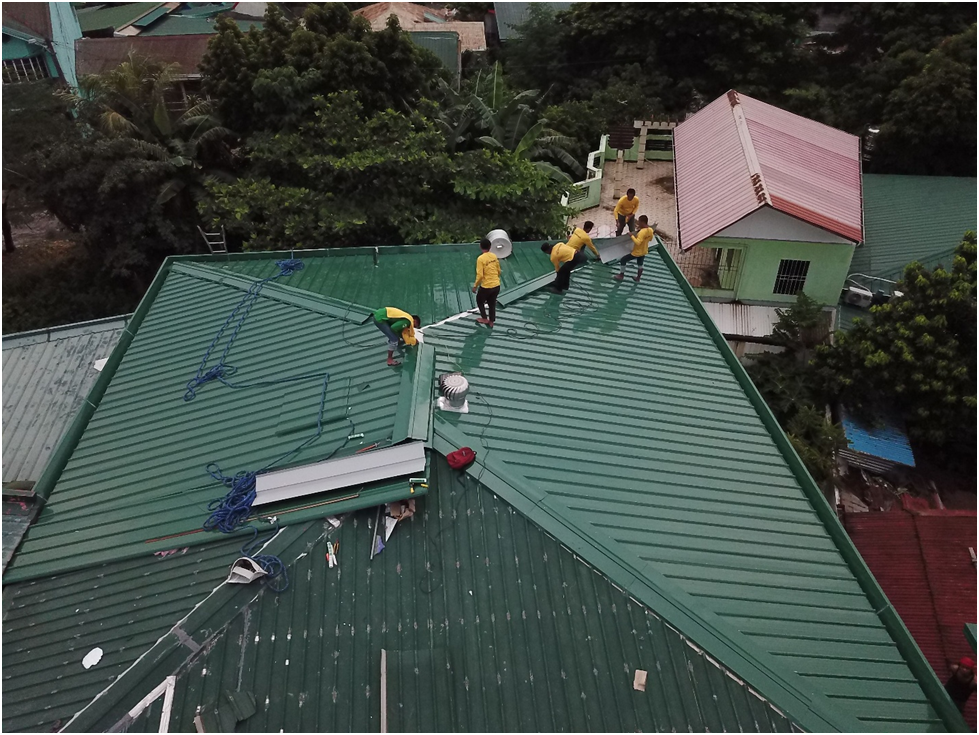
Tips to Help Your Roof Last Longer
Although every roof eventually needs replacement, good maintenance can significantly extend its service life.
Here are a few practical habits:
- Inspect your roof twice a year.
- Check the attic after major storms.
- Keep gutters free of debris.
- Trim branches that hang over the roof.
- Replace damaged flashing promptly.
- Address small leaks before they spread.
- Maintain proper attic insulation and ventilation.
- Schedule professional inspections every few years, especially as the roof ages.
Homeowner Insight
Many roofing contractors say the roofs that last the longest are not necessarily the most expensive—they’re the ones that receive consistent maintenance throughout their lifetime.
Safety Considerations
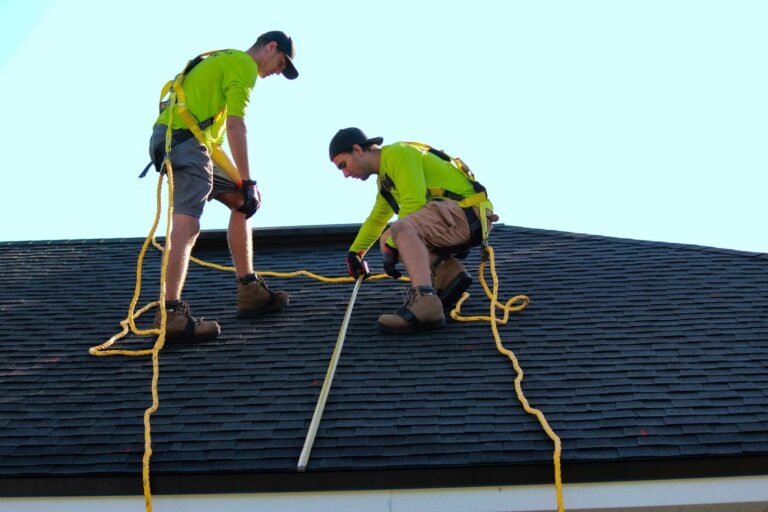
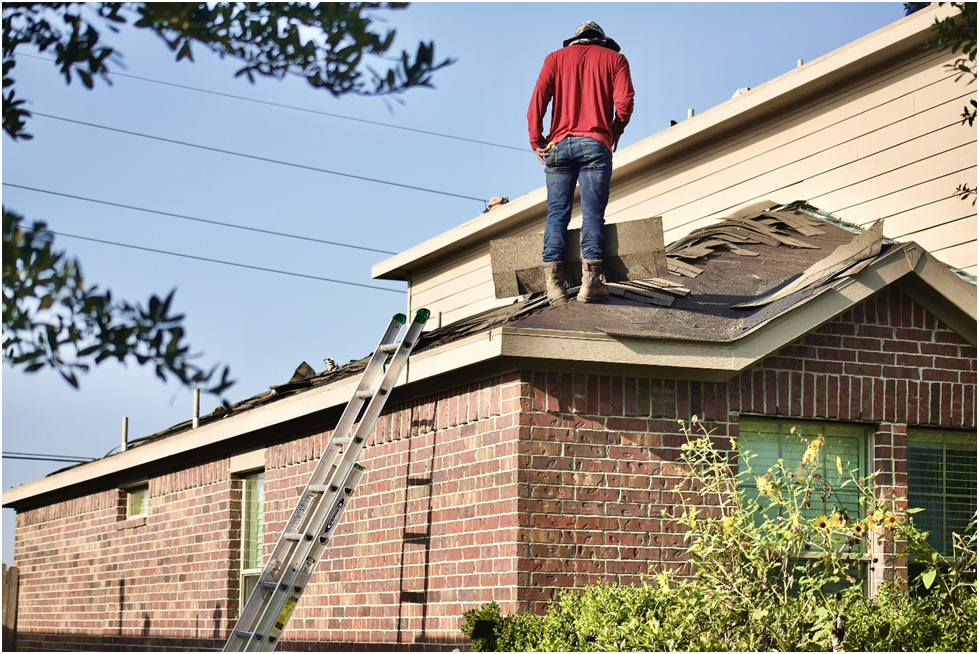
Roof inspections and repairs can be dangerous.
For your safety:
- Never climb onto a wet or icy roof.
- Avoid inspections during strong winds.
- Use binoculars for routine visual checks whenever possible.
- Place ladders on stable, level ground.
- Wear appropriate footwear with good traction.
- Stay away from overhead power lines.
- Leave steep roofs and structural concerns to professionals.
If you’re uncomfortable working at heights or your roof has a steep pitch, avoid climbing onto it and arrange a professional inspection instead.
When Should You Call a Professional?
While homeowners can perform basic visual inspections, some situations require professional expertise.
Call a roofing contractor if you notice:
- Persistent or recurring leaks
- Sagging roof sections
- Large areas of missing shingles or tiles
- Extensive storm or hail damage
- Damaged flashing around chimneys or skylights
- Visible daylight through the attic roof
- Soft or spongy roof decking
- A roof approaching the end of its expected lifespan with multiple signs of deterioration
A professional inspection is also recommended before buying an older home or after severe weather.
Related Roofing Guides
- What Is Roof Drip Edge? A Complete Homeowner’s Guide
- Types of Roofing Materials: The Complete Guide to Costs, Lifespan & Pros and Cons
- How Long Does It Take to Replace a Roof? Complete Timeline Guide
- Cost to Fix Roof Leak: Average Repair Prices (2026)
Frequently Asked Questions
1. How often should you replace a roof?
Most residential roofs require replacement every 20 to 50 years, depending on the roofing material, climate, installation quality, and maintenance.
2. When should you replace a roof instead of repairing it?
Replacement is usually the better option when damage is widespread, repairs are becoming frequent, or the roof has reached the end of its expected lifespan.
3. Can a roof last longer than its expected lifespan?
Yes. Proper installation, regular maintenance, good attic ventilation, and favorable weather conditions can help some roofs exceed their typical lifespan.
4. Does homeowner’s insurance pay for roof replacement?
Insurance policies often cover sudden damage caused by events such as hail or wind, but they generally do not cover normal wear, aging, or neglected maintenance. Coverage varies by policy, so review your insurance documents or speak with your provider.
5. Should I replace my roof before selling my house?
It depends on the roof’s condition, your local real estate market, and buyer expectations. An aging roof in poor condition may discourage buyers or affect negotiations, while a well-maintained roof with years of useful life remaining can be a selling point.
6. Can I replace only one side of my roof?
Sometimes. Partial replacement may be practical when damage is limited to one section and the remaining roof is still in good condition. A professional inspection can help determine whether this approach makes sense.
7. What is the average lifespan of an asphalt shingle roof?
Standard 3-tab asphalt shingles typically last 15–20 years, while architectural shingles often last 25–30 years or more under normal conditions.
8. Does replacing a roof improve energy efficiency?
A new roof alone may not dramatically reduce energy bills, but replacing damaged roofing, improving attic ventilation, and upgrading insulation during the project can improve your home’s overall energy performance.
Final Thoughts
Knowing how often should you replace a roof is about more than tracking its age. The best replacement decisions consider the roof’s material, overall condition, maintenance history, local climate, and whether repairs are still providing good value.
Regular inspections and prompt maintenance can often extend a roof’s useful life, but every roofing system eventually reaches a point where replacement becomes the safer and more economical choice. Planning ahead allows you to compare contractors, choose suitable materials, and avoid the stress and expense of emergency roof failures.
If your roof is nearing the end of its expected lifespan or you’ve noticed repeated leaks, missing shingles, or sagging areas, schedule a professional inspection before deciding on repairs or replacement. Acting early often prevents more costly structural damage.
If you’re unsure about your roof’s condition, schedule a professional inspection before deciding on repairs or replacement. Early action can prevent costly structural damage and help you plan your roofing investment with confidence.
Author Bio: The Fixora Home Editorial Team is dedicated to publishing trustworthy home improvement resources based on industry best practices and authoritative sources. Every guide is carefully researched and reviewed to provide homeowners with practical, accurate, and up-to-date information for maintaining and improving their homes.